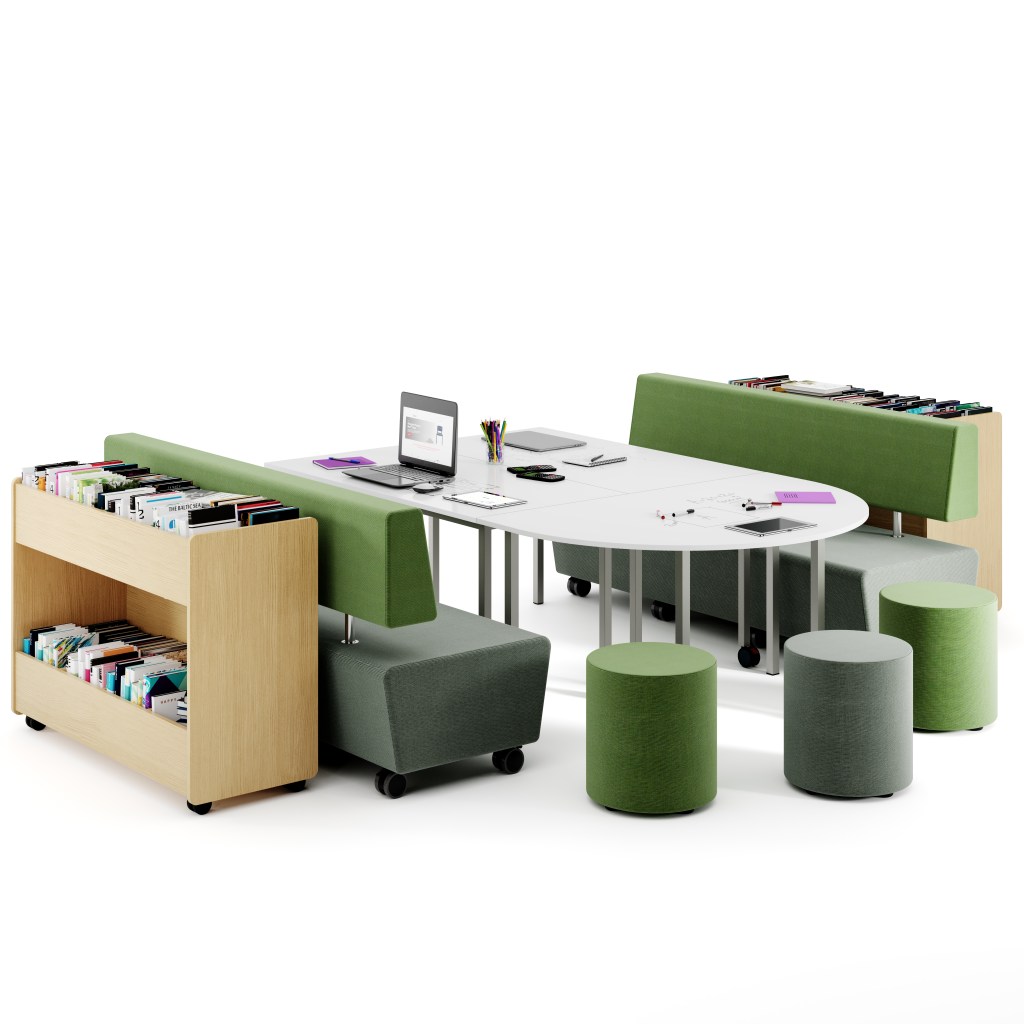
At 3Dwake, we believe in the transformative power of visualisation, especially when it comes to showcasing products like school furniture and seating. In this case study, we explore how we utilised our services with 3D classroom renders and revolutionised the way educational spaces are presented and marketed, offering unparalleled flexibility and creativity to meet the diverse needs of schools, educators, and students alike.
Switching from traditional to digital workflows:
Traditional methods of marketing school furniture often fall short in capturing the imagination and practicality of potential buyers. Limited by physical space, budget constraints, and the logistics of setting up multiple configurations, showcasing products in their optimal environments can be a daunting task, especially if using photography.
Using our knowledge and expertise of CGI and having worked with schools as educators, we worked with our client to design and create virtual classrooms, not limited in size, layout, or aesthetic and tailored our designs to specific age groups. Our client now has the freedom to experiment with different product configurations, colours, and materials, ensuring that every aspect of the space is meticulously curated to perfection before rendering.
Creating the educational spaces:
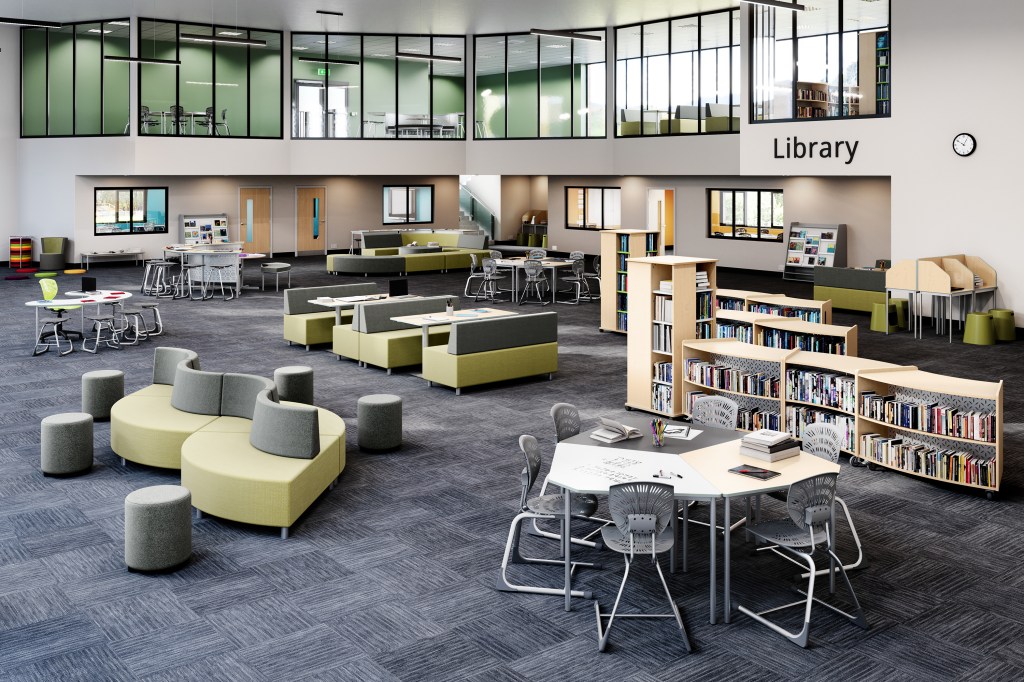
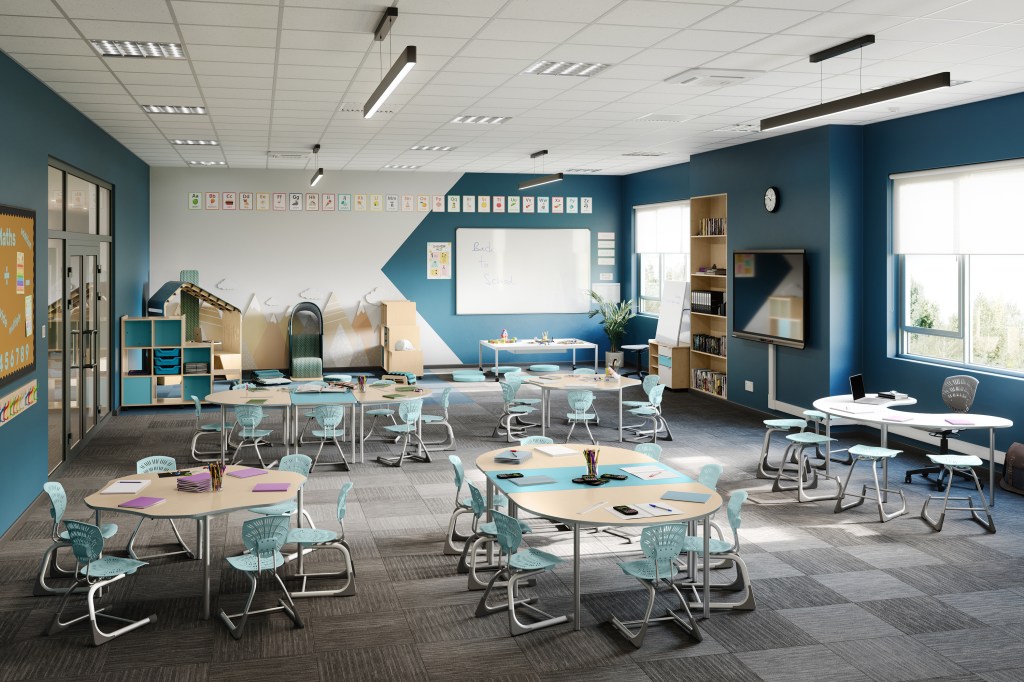
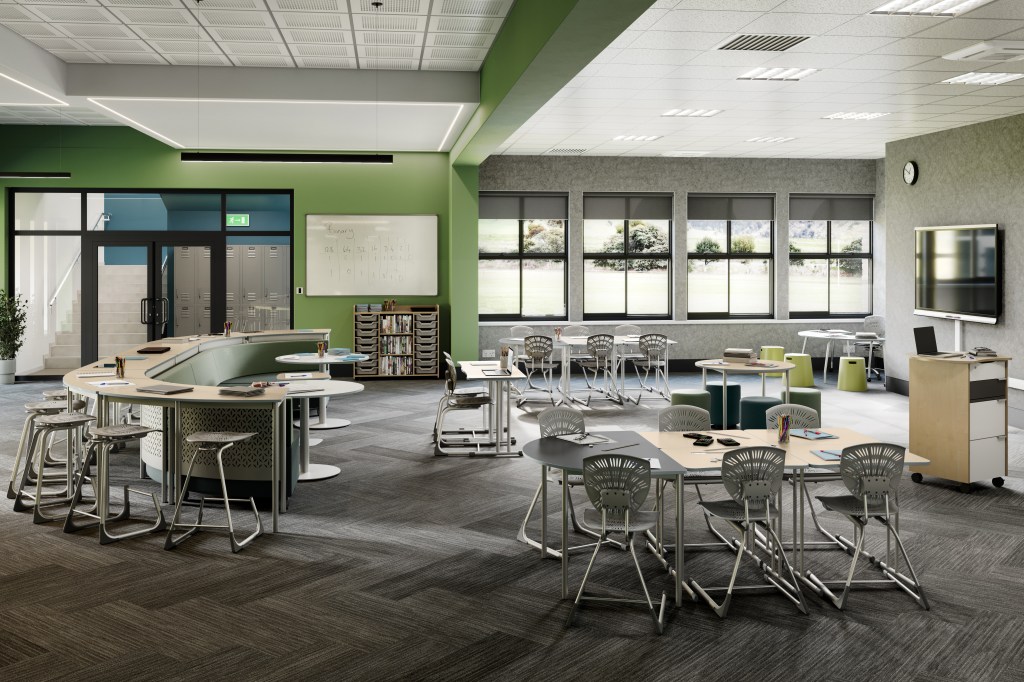
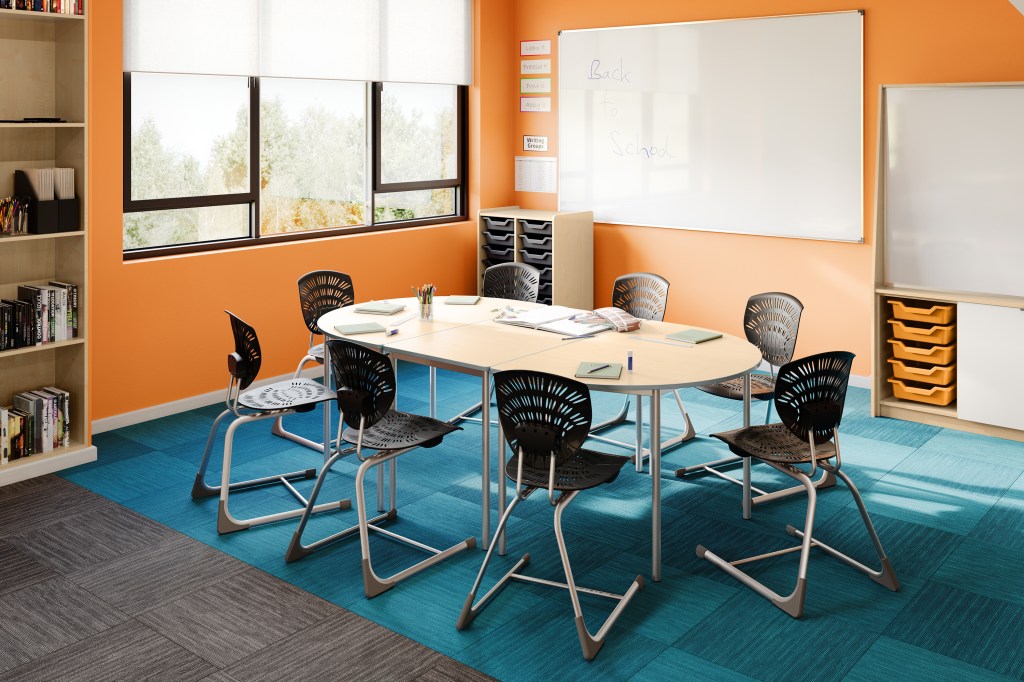
We designed our virtual classrooms for various age groups – from primary to high school – taking into account factors like space utilization, ergonomic design, and aesthetic appeal. With 3D rendering, we were able to showcase the versatility of the furniture in different classroom settings, including traditional rows, collaborative pods, and flexible learning environments. Better yet, the client could make changes to the space at any
time to suit the preferred angle or a change of furniture.
Accurately recreating furniture textures and finishes:
We then used their product catalogue as a blueprint, meticulously recreating each piece of furniture in stunning detail, from desks and chairs to storage units and collaborative workstations and matching their various finishes and textiles to showcase this years ranges.
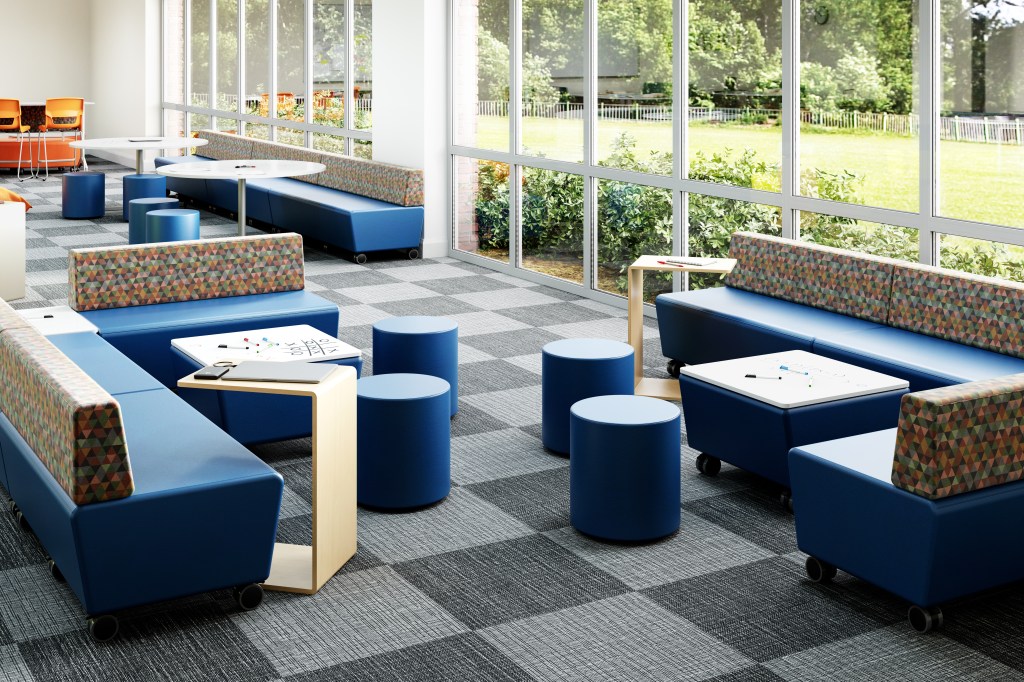
Control over camera angle, lighting and environment:
The impact of our rendering solution was immediate, by presenting the school furniture in realistic virtual environments, our client could effectively communicate the benefits and versatility of their products to potential buyers. It allowed us to visualise how the furniture would enhance learning experiences, and not a single piece of furniture had to be unpackaged, moved, and assembled. Moreover, our renders enabled the client to offer a wide range of customization options, from colours, textures, configurations, all whilst being able to change the environment, camera angle and lighting conditions.
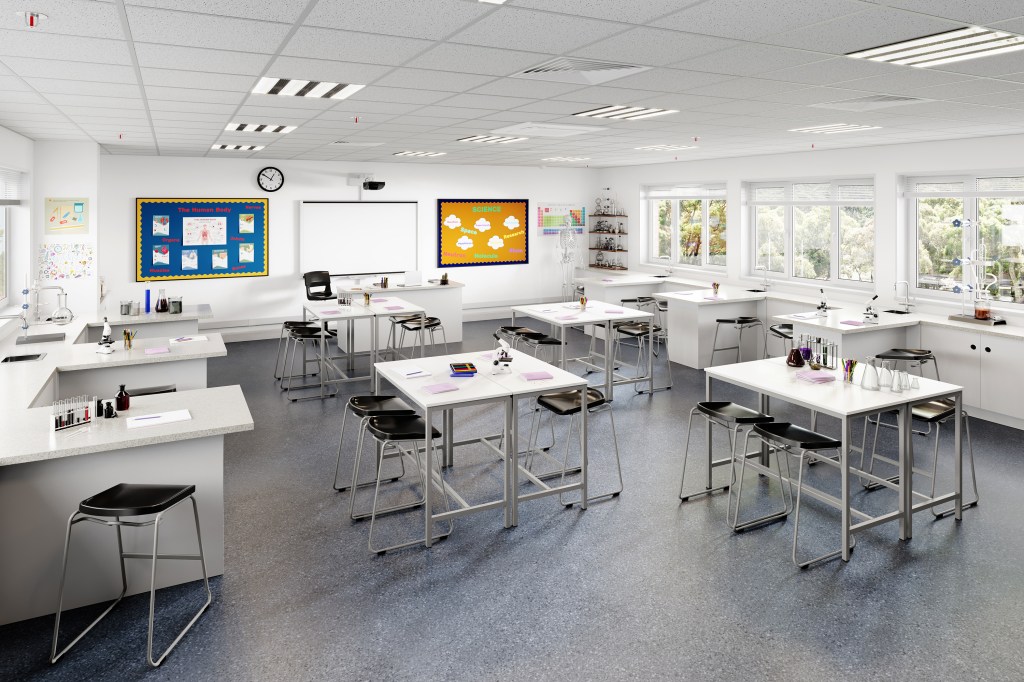
This case study demonstrates the immense potential of 3D rendering in transforming the way school furniture and seating are marketed and showcased.
By creating virtual classrooms that are adaptable to any size, budget, or age group, we’ve provided our client with a powerful tool for engaging customers, driving sales, and ultimately, shaping the future of education.

 3DWake
You must be logged in to post a comment.